
AI-Powered UAVs: Redefining Remote Infrastructure Inspection
Vikram Singh
UAV Systems Lead, Autoabode Defense Division · Autoabode
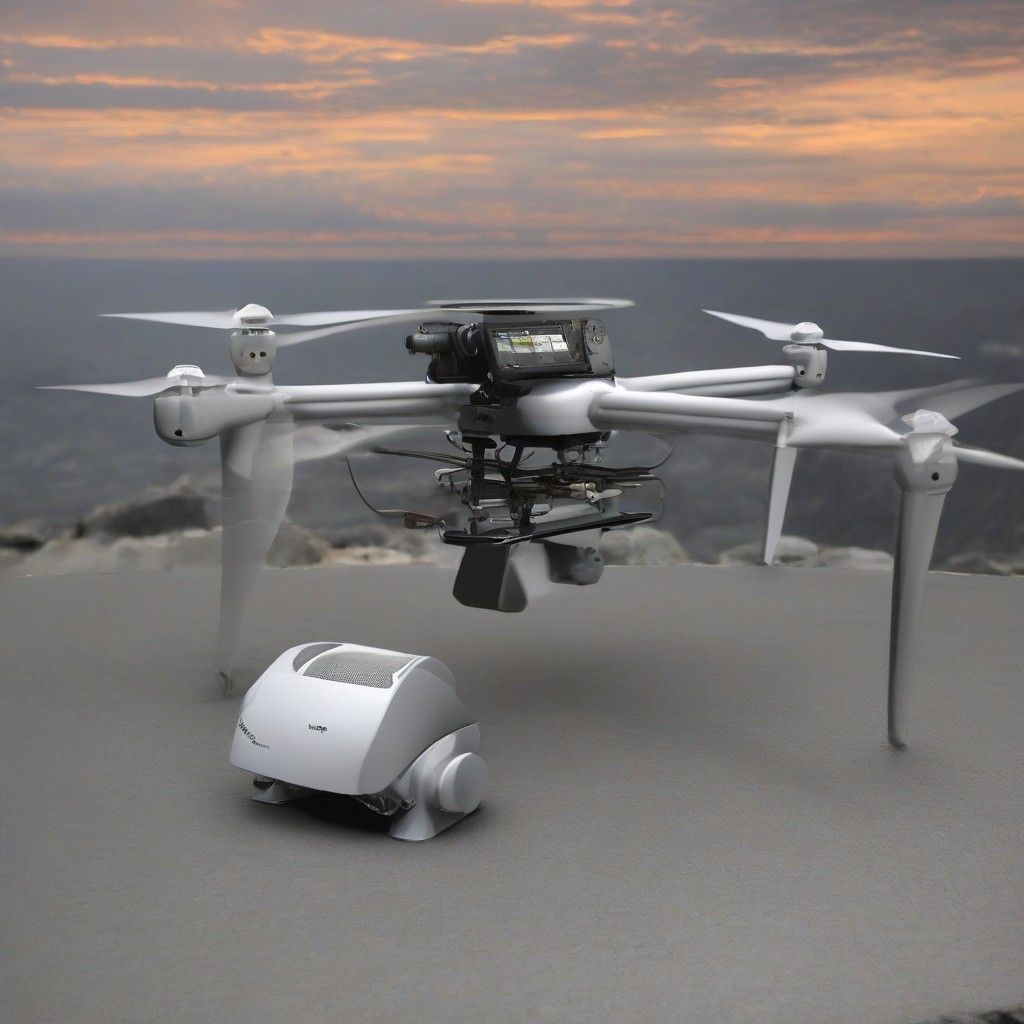
India's power transmission grid spans over 4.5 million kilometres of lines, most inspected on maintenance cycles of 12–24 months. In that interval, conductor fatigue, insulator contamination, and structural corrosion can progress from detectable anomaly to catastrophic failure. Traditional helicopter inspection costs ₹35,000–₹80,000 per tower and requires flight operations that are risky in high-voltage corridors. AI-enabled UAVs are beginning to change this equation fundamentally.
The Computer Vision Stack
The effectiveness of UAV inspection is entirely determined by its onboard sensor and inference stack. First-generation inspection drones captured imagery and transmitted it to ground stations for human review. The current generation runs inference onboard, converting raw sensor data into flagged anomalies in real time — no transmission bandwidth or human attention required at line speed.
Camera Systems
A modern power grid inspection UAV carries a gimbal-stabilized multi-spectral payload combining a 48MP visual camera, a FLIR thermal camera (640×480), and an ultrasonic proximity sensor for close-range standoff control near energized conductors. The visual camera detects surface cracks and insulator contamination. The thermal camera identifies hot joints — resistance anomalies that heat before they fail.
Edge AI Inference
Onboard AI inference runs on dedicated NPUs — NVIDIA Jetson Orin and Qualcomm QRB5165 are the most common industrial platforms. Models are trained on curated datasets of conductor defects, insulator damage, and tower steel corrosion. Inference latency targets <80ms per frame, enabling real-time flight path adjustment when a defect is detected mid-traverse.
Autoabode's BotBit UAV platforms support up to 5kg sensor payload with dedicated PCIe lanes for NPU co-processors, enabling custom inspection AI stack deployment without flight controller interference.
Autonomous Mission Execution
Beyond the sensor stack, truly autonomous inspection requires mission planning software that understands the inspection target's 3D geometry. For power towers, this means importing GIS data and LiDAR point clouds to generate inspection waypoints that maintain safe standoff distances while achieving optimal camera angles for every component. Autoabode's ground control software generates complete inspection missions for a standard 220kV tower in under 3 minutes.
Results in the Field
- Average defect detection accuracy: 94.7% at tower standoff distances of 3–8 metres.
- False positive rate: <6%, manageable with a downstream human review workflow.
- Time per tower: 12–18 minutes autonomous flight versus 45–90 minutes helicopter hover inspection.
- Cost per tower: ₹4,000–₹8,000 fully burdened versus ₹35,000–₹80,000 by helicopter.
- AI inspection outperforms human helicopter review by 23% on fine surface cracking due to consistent camera-to-subject distance.
Challenges: BVLOS and Regulatory Compliance
Scaling UAV inspection to territory-wide programmes requires Beyond Visual Line of Sight (BVLOS) operations. India's DGCA issued UAS Rules 2021 with a BVLOS approval pathway, but conditional approval requires detect-and-avoid capability (DAA) for manned aviation conflict. This regulatory friction is the primary bottleneck to 10× scale-up of commercial UAV inspection programmes in India.
Miniaturized ADSB-In receivers and collision avoidance transponders now fit within 25-gram payloads, and the integration of UAV operations into India's DigiSky infrastructure is progressing. Within 3–5 years, the regulatory and technical infrastructure for routine BVLOS inspection is expected to be mature — at which point the economics of helicopter inspection for routine maintenance will be impossible to justify.
Vikram Singh
UAV Systems Lead, Autoabode Defense Division · Autoabode Consumer Electronics Pvt. Ltd.
Expert author at Autoabode — writing at the intersection of industrial 3D printing, defence manufacturing, and advanced UAV systems. Based in New Delhi, India.
Explore Autoabode's Platforms
This article is part of Autoabode's technical journal. Learn more about our core platforms built in India for defence, aerospace, medical and industrial teams:
More from the Journal
Off-Grid Communication Solutions for Mountainous Terrain: An Engineering Field Guide for India's High-Altitude Operators
Off-grid communication solutions for mountainous terrain are not optional in India — they are the difference between a coordinated operation and a stranded section. This engineering field guide breaks down the radio physics that defeats conventional VHF/UHF in the Himalayas, the mesh architectures that survive ridge-line shadowing, and the cold-weather, power-budget and security trade-offs that determine whether a system delivers in the Karakoram and Western Ghats. Built around real deployment data from Autoabode's MeshVani encrypted communicator and MeshVani Relay platform in service with the Indian Army, ITBP, NDRF and high-altitude expedition teams.
Drones & UAV · 7 min readModular UAV Payloads for Multi-Role Missions: A Technical Guide
Explore the technical specifications and strategic advantages of modular UAV payloads for multi-role missions. This guide covers hot-swap systems, sensor fusion, and real-world applications for defense and industry.