
GANTRY
CONCRETE
3D PRINTER
India's construction-grade gantry 3D concrete printer with 2×2×2.5 metre build volume. Rack-and-pinion servo gantry, piston pump extrusion, interchangeable nozzles from 6mm to 50mm. Print mortar, concrete, geopolymer, UHPC, soil-cement blends and fibre-reinforced mixes.
BUILT FOR
CONSTRUCTION SCALE
Twelve engineered systems purpose-built to meet CPWD tender specifications for industrial concrete 3D printing — from servo-driven gantry to turnkey delivery.
Gantry Motion System
Rack-and-Pinion Servo Drive
Industrial rack-and-pinion mechanism with servo motors featuring encoder feedback and brakes on all axes. Low-backlash, noise-free gearboxes deliver high precision and high torque throughout the entire build envelope. Full X, Y, Z and tangential direction control for complex geometries.
FULL SPEC SHEET
Click any category to expand the full set of specifications.
Specifications subject to revision. Contact AutoAbode for project-specific configuration and technical data sheets.
SEE IT IN ACTION
Real product photography of the AutoAbode Gantry 3D Concrete Printer — from complete system setup to nozzle-level detail and printed specimens.
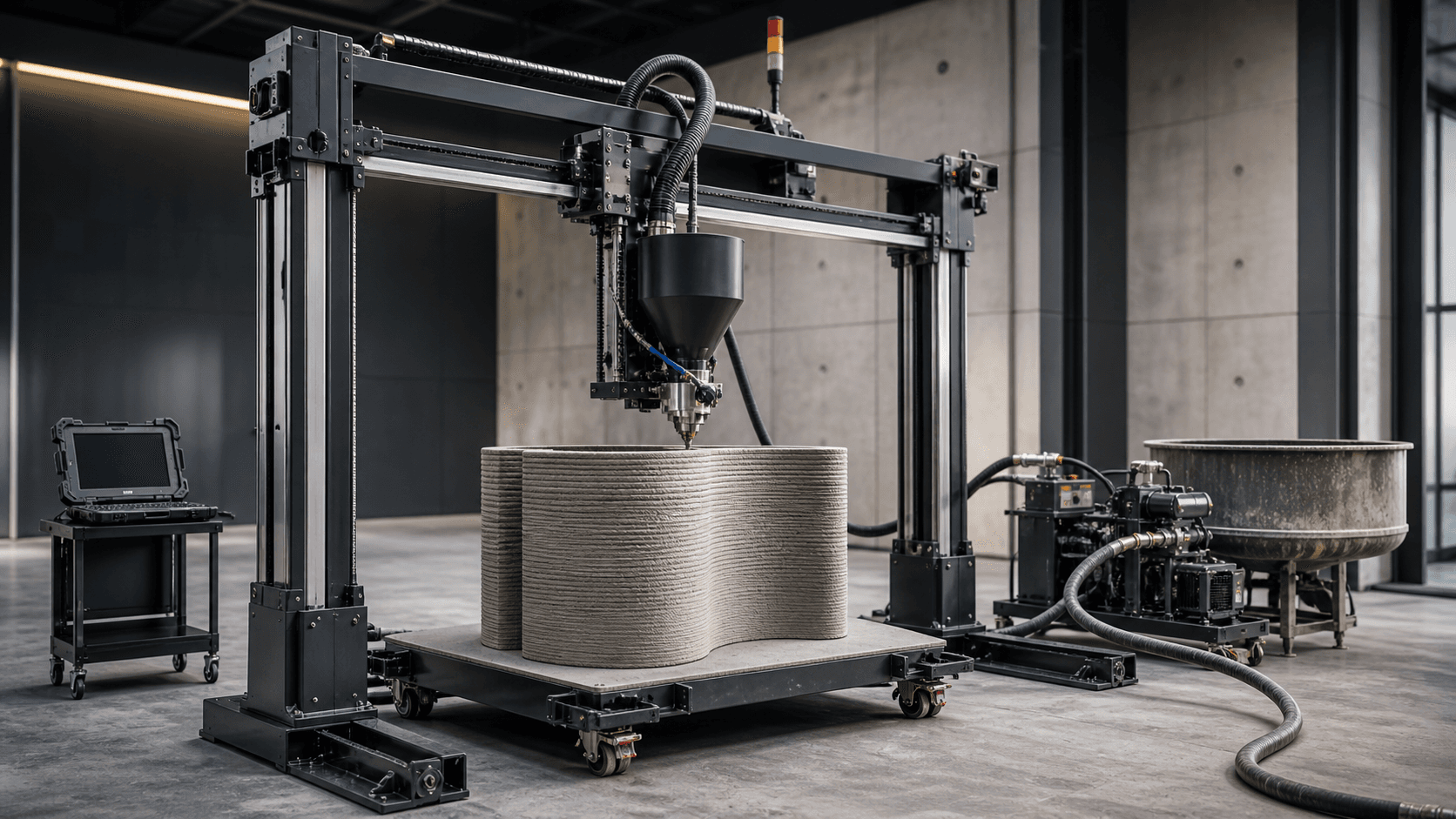
Complete Gantry System
AutoAbode Gantry Concrete 3D Printer
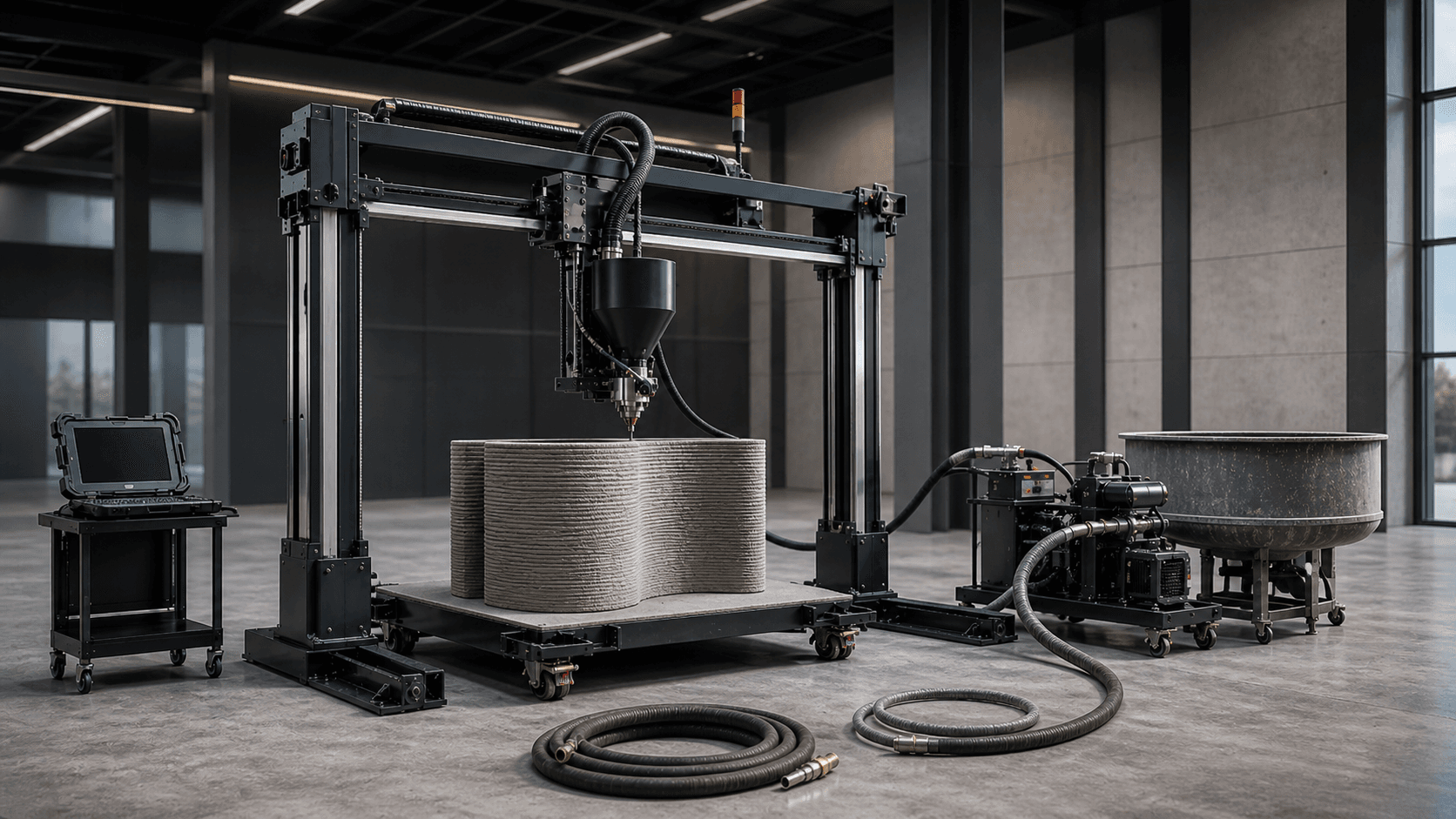
Full Production Setup
AutoAbode Gantry Concrete 3D Printer
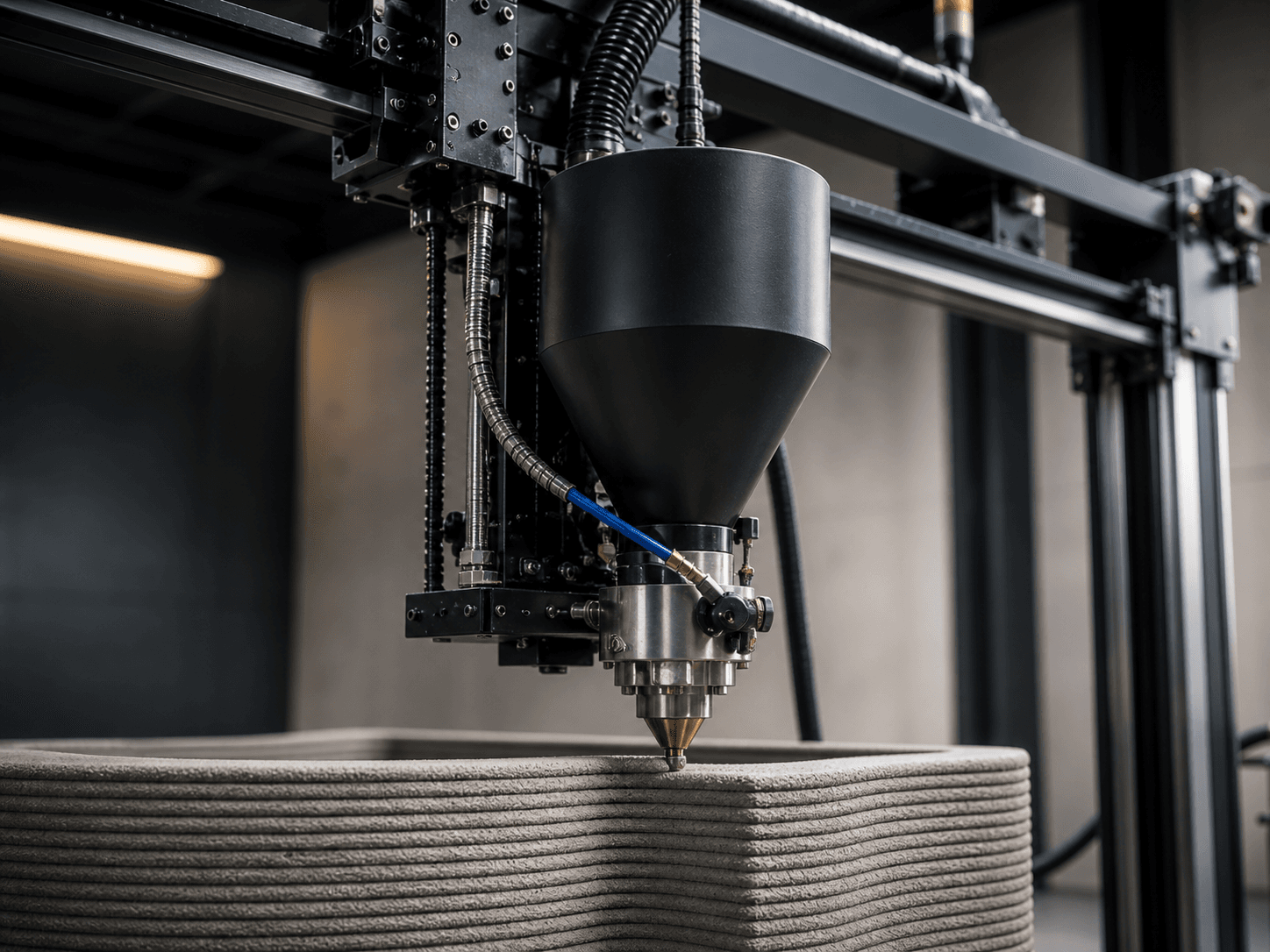
Nozzle & Hopper Detail
AutoAbode Gantry Concrete 3D Printer
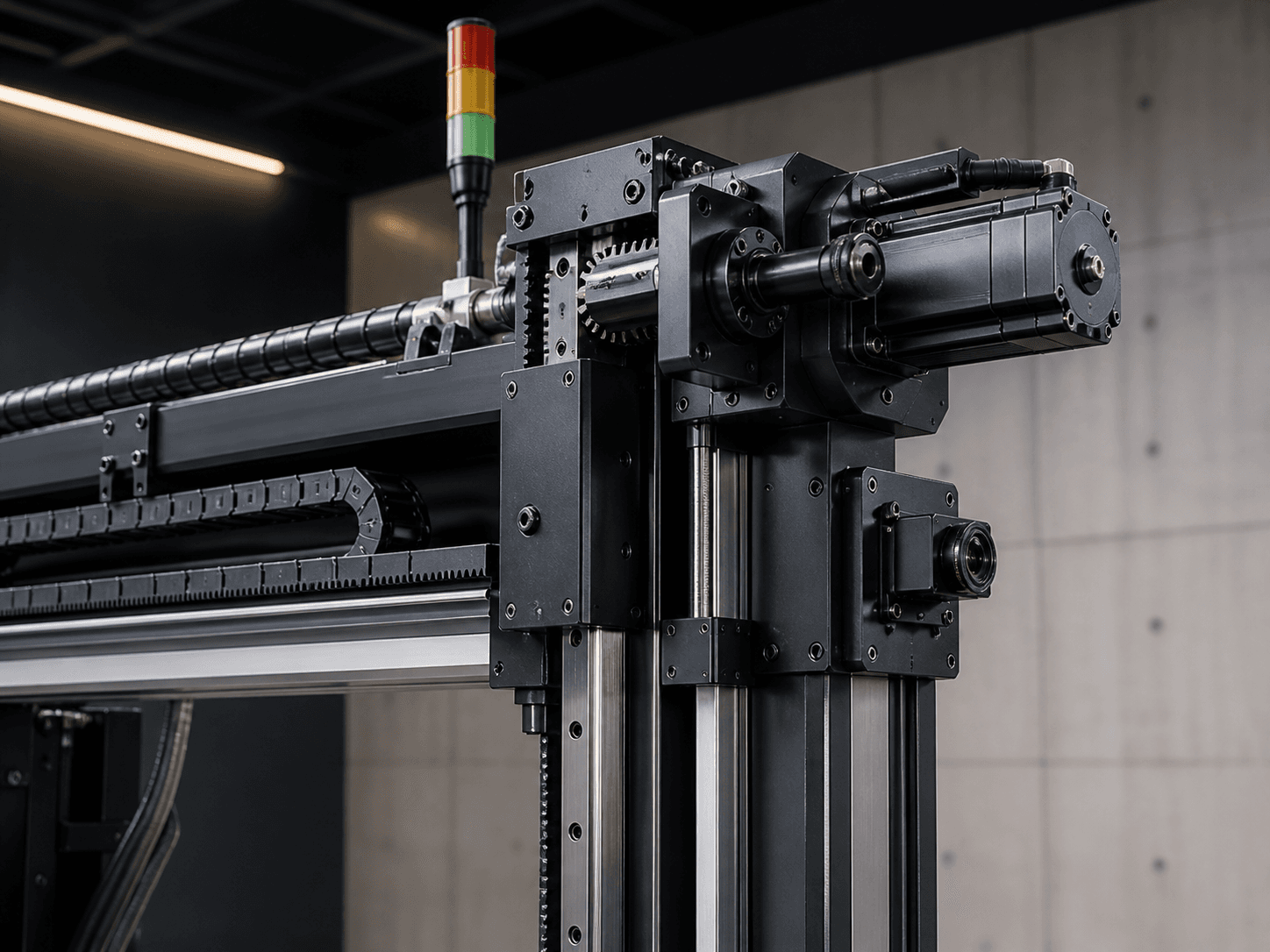
Gantry Mechanism
AutoAbode Gantry Concrete 3D Printer
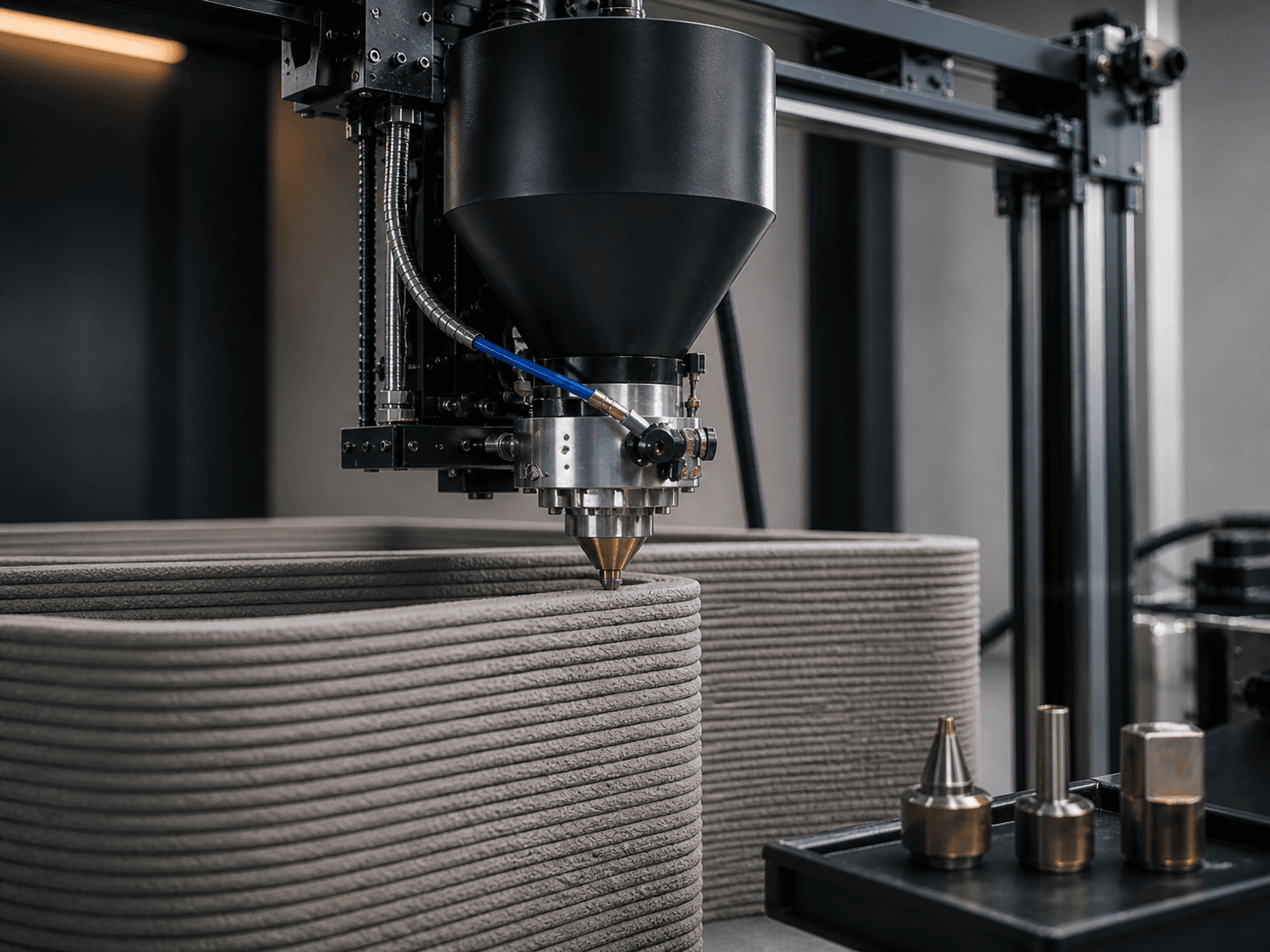
Interchangeable Nozzles
AutoAbode Gantry Concrete 3D Printer
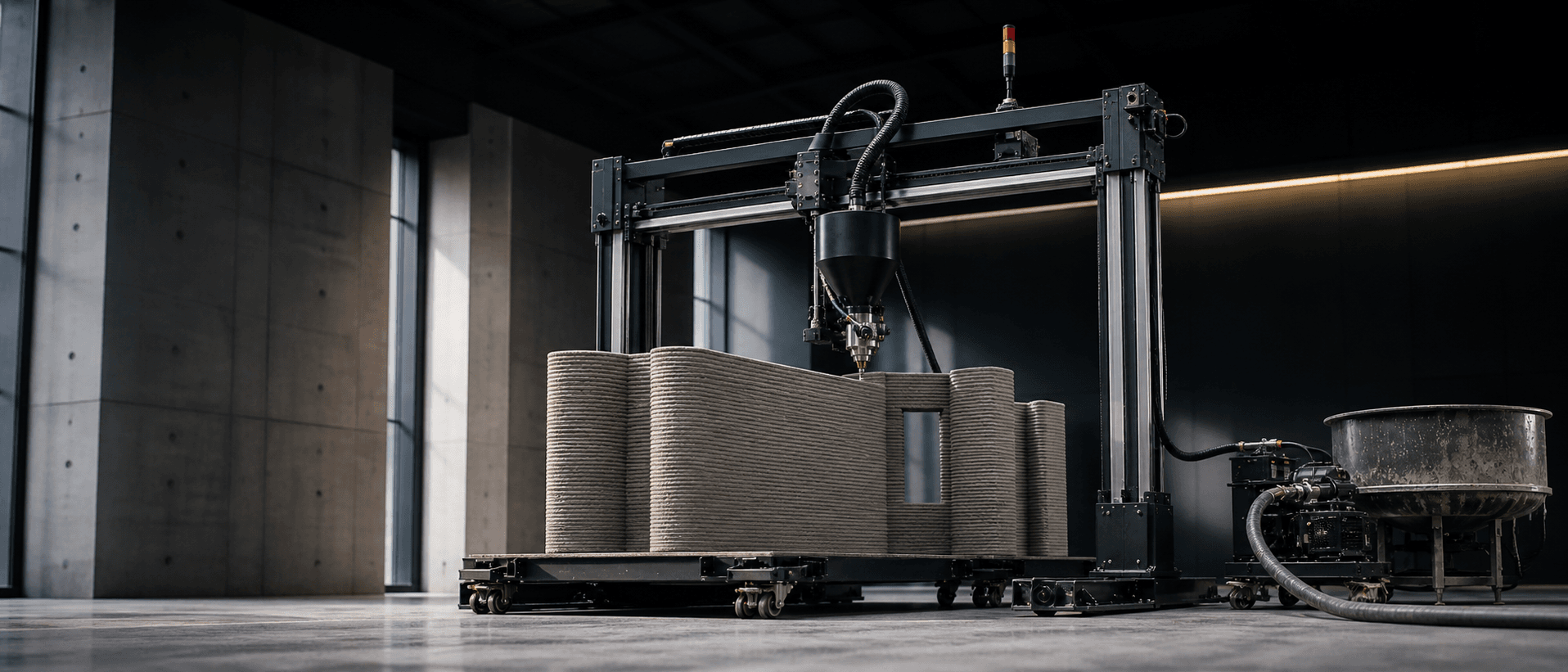
Wide-Angle View
AutoAbode Gantry Concrete 3D Printer
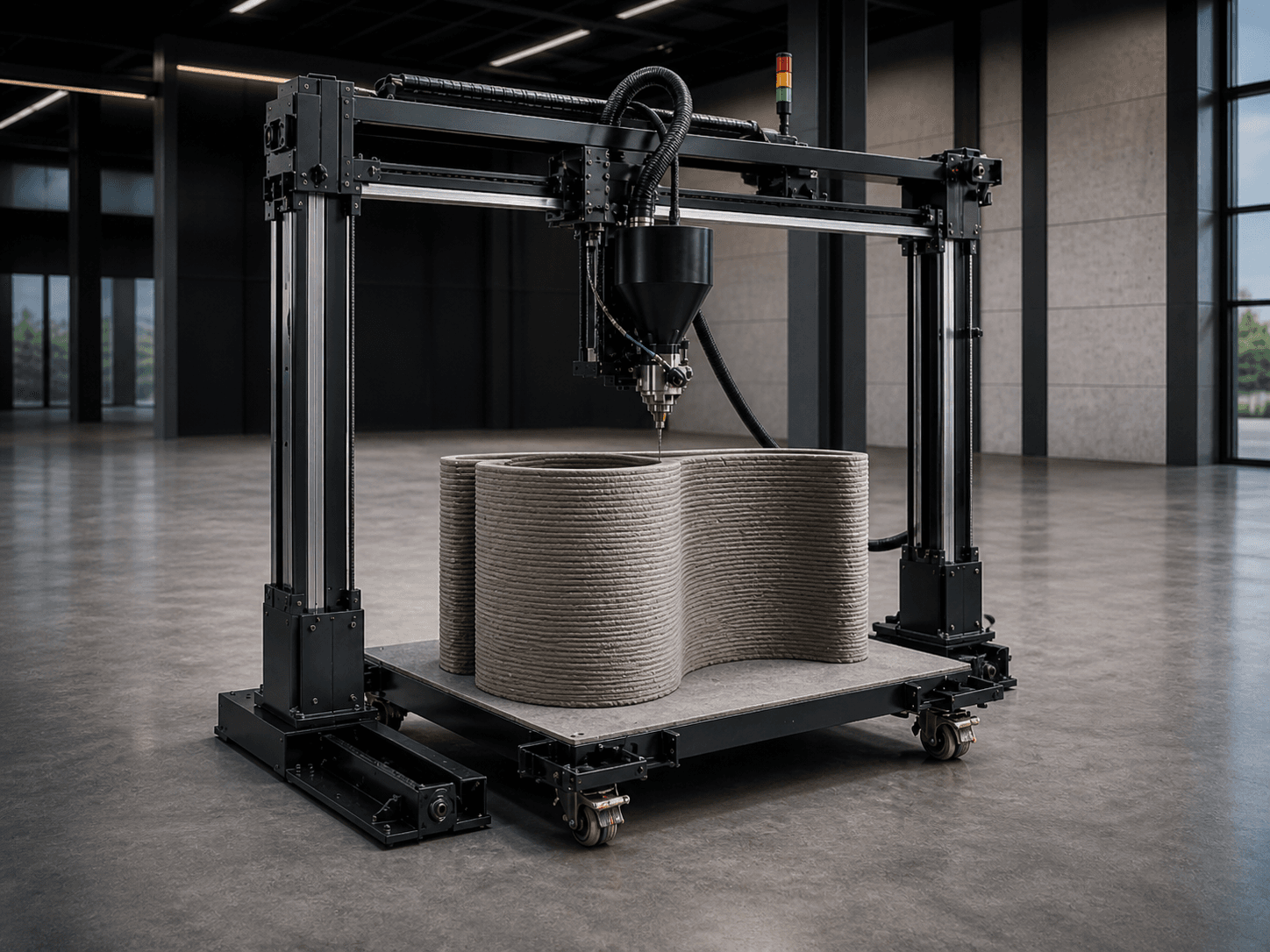
Curved Geometry Print
AutoAbode Gantry Concrete 3D Printer
All images are of the actual AutoAbode Gantry 3D Concrete Printer system.
BUILT FOR
EVERY SECTOR
From defence-grade border shelters to academic research labs and smart city infrastructure — concrete 3D printing applications across construction and research.
Rapid-Deploy Military & Border Infrastructure
Print reinforced concrete shelters, bunkers, and barrack modules directly on-site with zero formwork and minimal manpower. Ideal for remote border outposts and disaster-relief scenarios where speed and structural resilience are mission-critical.
Rapid Border Bunker Construction
Deploy the printer at forward operating locations to fabricate blast-resistant bunker walls in under 48 hours. Interlocking printed segments bolt together for quick assembly without skilled masonry labour.
Army Barrack Modules
Print standardised 3 m × 6 m single-room barrack modules with integrated conduit channels for electrical and plumbing. Stack or tile modules to form multi-room complexes at permanent or semi-permanent bases.
Disaster Relief Shelters
Rapidly print single-storey transitional shelters for displaced populations using locally sourced sand-cement mixes. Each unit provides 18 m² of habitable space with openings for doors, windows, and ventilation.
BUILD WITHOUT
BOUNDARIES
Construction-grade, tender-ready, and approved by CSIR, IIT, and defence establishments — the AutoAbode Concrete 3D Printer is built for real-world deployment at scale. Let our extrusion specialists help you configure the right system for your project.
Serving Research Labs Across India — On-site demonstrations in Delhi, Mumbai, Bengaluru, Hyderabad, Chennai, Pune